Thursday, November 6, 2008

So where were you when USA elected her first black President?

I was sitting at home sharing 2 hours of jubilation with hundreds of strangers from all over the world... thanks to Twitter.

Odd concept really; an entire site built around answering the question: "What are you doing" in 140 characters or less. I had joined the Election 2008 group and was reading 'tweets' from people all around the world - so many different languages from so many different countries - and all sending warm wishes and congratulations to the Americans. And it was pretty damn special witnessing so many hundreds of people express their elation at the election result . . . over and over again as people awoke, logged in and yelped for joy.

Flickr is being used to gather together messages from all around the world for Barack Obama; really cool example of utilizing crowd sourcing to capture the spirit of our time - and this is history unfolding.

I was thinking about all this in relation to a long discussion I held with Deb and Pippa yesterday about the digital divide. And I got to thinking just how brilliantly the whole election experience with Twitter highlighted to me how technology is also being used to brilliantly bridge divides of geography, nationality and community - it truly was a global party! Brian Kelly blogged about this being a 'water cooler' moment and very cleverly took a screenshot before the group dissappeared (which I failed to do). Interesting too the comment from Kev Hickey on Brian's blog:


"As I posted on Jaiku this morning “Via Twitter I can see that Lee le Fever has a street party in Seattle, Stephen Fry is grinning in Madagascar & John Cleese is tapdancing”.

Glad too that a Facebook group has been set up to capture photographs from around the world depicting this momentous turning point in American history - thank you Jenny Levine. We posted an image of the 30minute updates we posted in Levin Library (yes America - the world cared about this election!)
PS Great post on BoingBoing.

Tuesday, November 4, 2008

Librarians vs IT Techies : why they just can't get along.

To my way of thinking you can't talk about libraries without talking about IT. So I was quite interested when Hazman Aziz pointed out this really interesting discussion thread which considers why Librarians and IT departments have so much trouble getting on. To view the Tech Therapy video which sparked the debate click here.

The discussion identifies the obvious differences between libraries and IT: predominantly female vs predonominatly male, long tradition vs relatively new and very mission-driven vs less so.

But there are similarities too, including the really funny one that only 3 major industries call their customers users: libraries, IT and illicit drugs! Going deeper, both IT staff members and librarians often feel like second-class citizens on university campuses, both groups inhabit a rapidly-changing work environment and thus both groups have insecurities about the future of their professions.

A few exerpts from the discussion:
"Our library and IT department have a very cordial and productive working relationship. I think the key to this is that we are lucky enough to have never had an administration that threatened to impose a merger on us. Rifts occur when there is talk of merging and you have to wonder ultimately who will call the shots."

"As far as I can tell, none of it is lack of cordiality; most IT departments and librarians get along just fine. It’s different worldview. Librarians have a tested model of service which needs to work reliably, and archivists have a definition of preservation which lasts decades or centuries. IT people think in the moment. Preservation means “until the next backup is made” or, at best, “until the next audit or company reorganization”. Service means “make sure the site is up and the backups get done”.

"..... The end result is that IT people don’t even realize that librarians have expertise in data description, storage, and reorganization, because librarians are too humble to volunteer and IT people are too arrogant to ask".

"Turf war. In an era when both parties feel uncertainty about the future of their jobs, both want to carve out as much of a space for themselves as possible."

"As many institutions are merging undergraduate libraries and computer center into learning commons, who should head such a hybrid? As the focus moves from providing information to enhancing learning, are those trained in library science best equipt for this mission or might a new bred of IT staffers serve student learning needs more effectively in this technological age?"

"IT see the world in terms of “us” and “them” which breeds hostility to “stupid” questions."

"Librarians would never host a group called the Daily WTF to discuss the stupid user questions we’ve hosted that day"

"Librarians constantly tell our patrons “there is no such thing as a stupid question.” Have you ever had an IT say that to you?"

"IT folks tend to prefer a chain of command. They like reporting to one person and getting their assignments from one person. Librarians, on the other hand, are very anti-authoritarian and independent when it comes to their daily tasks and much more collegial in terms of the sources of their job assignments."

"IT people are not taught to communicate; they are there to fix problems. Librarians, especially public service librarians, have a customer (or patron or user) service orientation and are taught carefully how to draw patrons out in terms of their information needs, and to explain carefully how to find and use the resources appropriate for their information needs."

".... a cultural clash – IT people often come from the for-profit sector, expecting special bonuses and the like that don’t exist in the non-profit world. You don’t get special compensation for doing your job well, you get your paycheck."

"I cringe to think how many times I’ve complained about a technology design (be it networked printers, web pages, whatever) being confusing to users and given the reply “they’ll figure it out”. That’s not acceptable to a librarian,"

"IT is regularly left out of planning and decision making processes until such time as the work is ready to be dumped on them during implementation. If you want a better working relationship, invite some IT staff to your planning meetings and listen"


Monday, November 3, 2008

Gaming and Libraries

This post has been copied entirely from the blog Citegeist, written by Cindi Trainor, Coordinator for Library Technology and Data Services at Eastern Kentucky University Libraries. I met Cindi at the Bridging Worlds Confeence in Singapore where she presented a paper entitled "Open source, crowd source : harnessing the power of the people behind our libraries". This was a session I was particularly sad to miss, but it clashed with the session by Joe Pagano on web analytics, a subject important to have a handle on when arguing for funding and justifying my existence!

The post that follows is about the virtues of gaming written by Eli Neiburger, Ann Arbor District Library, and will help inform my future thinking around gaming in libraries; which will have to be worked through in the next year or so as we plan our new Young Adult library. Jenny Levine is another uber-librarian with a strong interest in libraries and gaming so her blog is worth following too: The ShiftedLibrarian and if you click here you can read the Library Technology Report, Gaming and Libraries : Intersection of Services (pictured above) written by Jenny .

Anyway, Cindi's blog is thoughtful and a must-read I have decided, and since I can't say it better than her here is the copied post:

Eli Neiburger, Assistant Director at Ann Arbor District Library, on gaming and libraries. This presentation concentrates on learning that happens in games (not on games designed for learning).

Games

  • Require advanced literacy (words and interface)
  • Help users overcome achievement gaps
  • teach reading comprehension
  • teach skills useful in the workplace
  • teach search skills
  • teach that success requires risk
  • teach delayed gratification
  • teach perseverance with little risk of failure

Gaming events in libraries teach kids

  • that the community supports them
  • that the community values youth
  • constructive use of their time

Gaming events in libraries teach kids (in a world where athletic ability is valued in schools more than anything)

  • commitment to learning
  • positive values (caing equality social justice, integrity, honesty)
  • social competencies (planing & decision making, interpersonal competence, resistance skills, peaceful conflict resolution (peer pressure working for you: “shut up so we can play” rather than against you: “let’s see if we can get kicked out.”)
  • positive identity: personal power, self-esteem, sense of purpose, positive view of failure

They are gaming among you: 72% of Americans play video games. more adult women than kids.

Where are people spending their money: music $21B; DVDs $23B; $24B games; books highest. media almost exactly divided, percentage-wise.

What is at stake if we don’t do this? ask a travel agent. our collections will become irrelevant if we can get veryting ever printed with an ebook; all networked information with an implant

Libraries = conversations through content. we take content that is normally consumed individually and make a social event out of it. Library is adding value to content; it’s what we’re here to do. Games are only a new format.

Good games for libraries: Wii: rock band, big brain, wii sports, super smash bros, pokemon, DDR

GTsystem.org - online tournament scoring and management tools

  • includes blog, event registrations, brackes, generates leaderboards (local, regional, national)
  • GTsystem wiki for rules and history
  • synchronzed tournament days with online finals. winners play off each other online.

eli at eliworks dot com

Q&A: board games are really niche entertainment; video games have a larger draw

Rosalie Blake awarded a LIANZA Fellowship

We are so proud of our boss!

Our illlustrious leader has been awarded the highest professional award in New Zealand librarianship.

The full citation can be read here but she has been awarded the award for
... her sustained and energetic contribution to the development of public libraries, for her innovative leadership and contribution to the world of open source library information systems and for outstanding contribution to the profession during her long career.
Rosalie led Horowhenua Library Trust through the development of Koha in 2000, the world's first open source library management system, and more recently Kete in 2007, an open source digital library which employs many so-called web 2.0 technologies. Both of these awards won the 3M Award for Innovation in Libraries in their respective years.

We are so proud of our boss - well done Rosalie, we love working for you.

Saturday, November 1, 2008

Keeping track of blog posts

I love Bloglines! I find it the easiest way to quickly keep track of whats happening in a bunch of different places on the internet and an important way to keep developing professionally. I love the way I can scan hundreds of entries and either read them there and then, or tick the ones I want to look at later. I do this a lot as I usually check my bloglines account while watching TV (do any public librarians get time to do this during their work day?).

Bloglines works by adding 'RSS feeds' to your account. As new posts are added to the source site the headlines are fed through to the Bloglines account.

Some of my feeds are library related, some techie, and some just plain quirky. Here is a list of my favourite RSS feeds:

Boingboing, Citegeist, ComputerWorld, CoolTools, Digg, Fresh and New, Information Literacy meets Library 2.0, Koha Community, Libraries Interact, Library Journal, Library Link of the Day, Library Tech NZ, McGovern Online, PC Magazine, Programmable Web, Read Write Web, The Shifted Librarian, Slash Dot, TEDtalks, The Thinking Blog, UK Web Focus and Wired.

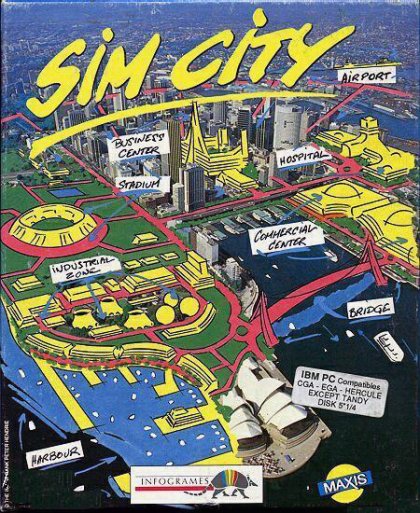
SimCity now free software

My kids - well 10 yr old Mr L really - loves gaming. All kinds: Xbox, PC, PS2, online - don't matter which - hes not fussy. Spends hours at a time (days if I would let him!) Fortunately my 4 cherubs have to share the hardware so they tend to be limited to an hour a day... kids are extremey good at self policing when it comes to rationing scarce resources!

Surprisingly to me, he is into SimCity at the moment. I don't know why but I always imagined Sims was for girls - like playing dolls houses for big girls. Habbo Hotel used to be a favourite in our family - introduced by Miss M (now 13) - but she's moved onto Bebo which is all consuming!

Actually its amazing how many kids use Bebo as their primary source of communication - email is just so over. My kids all have Bebo accounts, as do all their cousins, and I love the way they all keep in touch, make plans, share photos and support each other.

Anyway, back to my starting point for this rambling ... SimCity has been released under a GPL licence! How cool is that! I got this news from boingboing which is one of my favourite blogfeeds. Quoting straight from Cory Doctorow:
"SimCity has just been released as free software under the GPL version 3 license (though the name has been changed to Micropolis for trademark reasons; it was the original working title). This was precipitated by the inclusion of SimCity on the One Laptop Per Child XO machines, but no reason the kids should have all the fun. Can't wait to see the SimCity hacks that emerge now."

Man in the dark (go on - just take a look . . . )

This is the coolest thing ...

not gonna say too much - just go have a look.